Timber Decking in Brisbane
Based in Grafton, servicing Brisbane
Talk to The Team
Contact Us
Trusted Decking Supply for Local Projects
Marshall Notaras Hardwoods has supplied Australian hardwood to builders and homeowners across Brisbane for decades, bringing genuine timber expertise to every project we support. Established in 1952, our family-owned business understands what decking timber needs to withstand Brisbane's warm, humid subtropical climate, from heavy summer storms to prolonged sun exposure.
We stock dense, naturally durable hardwood species that resist warping, rot and premature wear, giving homeowners and builders confidence in the finished result. Whether you're renovating a Queenslander, building in a new estate or fitting out a commercial space, we've got decking suited to the job.
Our boards are milled to Australian Standards, so quality and structural integrity are never in doubt. We work with trade professionals delivering projects across greater Brisbane, as well as homeowners tackling their own renovations.
Brisbane customers choose us because we combine decades of hardwood knowledge with honest, practical advice rather than a sales pitch. As a long-standing supplier with a strong stockist and agent network, we can deliver reliably no matter the project size. Call our team on
(02) 6642 3477 to discuss timber decking options for your Brisbane build.
Extensive Timber Range
Choose from flooring, decking, cladding, structural hardwood and more—cut to spec and ready to ship Australia-wide.
Eco-Focused Sourcing
All timber is responsibly harvested and processed with minimal waste, supporting long-term environmental sustainability.
Nationwide Delivery Network
No matter your project size or location, we deliver reliable Australian hardwood when and where you need it.
Decking Designed for Queenslander Living
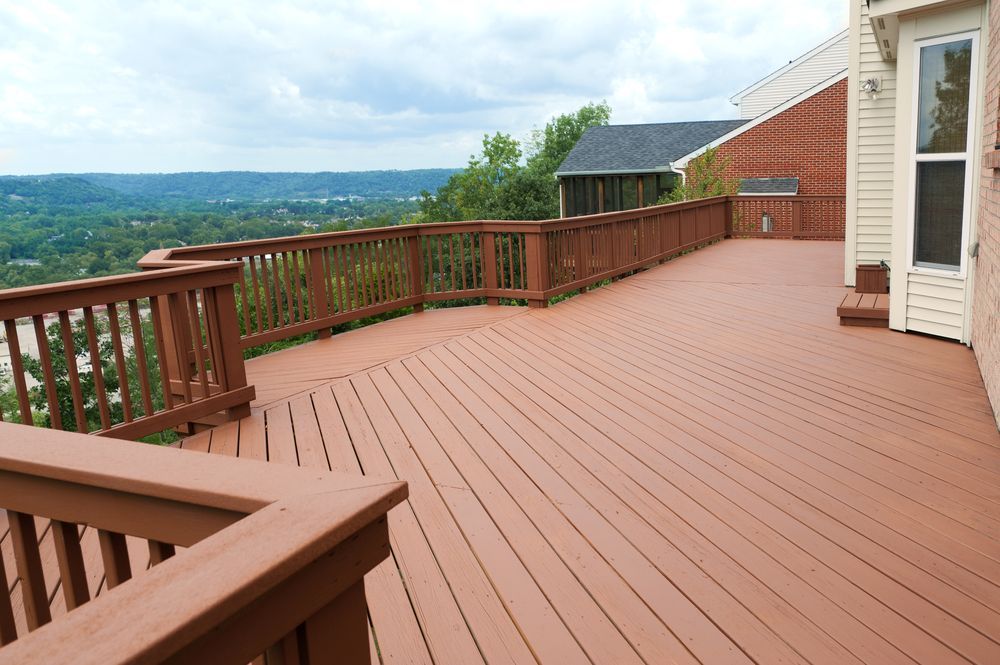
Brisbane's mix of classic Queenslanders, modern builds and inner-city apartments means decking needs vary enormously from one project to the next. We supply hardwood species like Spotted Gum, Blackbutt and Ironbark, each chosen for their ability to handle Brisbane's humidity and sun exposure while complementing a wide range of architectural styles.
Our team helps customers work through the practical considerations of species selection, covering durability, colour and the level of maintenance each option requires. With an established stockist and agent network across the region, we're able to supply decking reliably, whether it's a single elevated Queenslander deck or a larger commercial fitout.
Many of our Brisbane customers are restoring traditional homes or extending outdoor living areas designed to make the most of the subtropical climate. We also support builders managing multiple projects at once, ensuring consistent stock and quality throughout.
Having supplied timber to fast-growing urban and suburban areas for decades, we understand the particular demands that come with high-density development. If you're planning a decking project in Brisbane, we're happy to help you find timber genuinely suited to your build.
Enquire Today in Brisbane
Contact Us
Our Contact Details
T. 02 6642 3477
ABN: 33 659 642 903
ABN: 90 000 308 789
2018 and 2019 Winner – Excellence in Trades & Manufacturing – Clarence Valley Business Excellence Awards


Frequently Asked Questions
Can you build a deck on a sloping block?
Yes, decks can absolutely be built on sloping blocks. In many cases, a deck is one of the most practical ways to make use of an otherwise difficult site. Elevated decking supported by posts and bearers can be engineered to suit varying degrees of slope, creating usable outdoor space where a traditional patio or ground-level area wouldn't be feasible.
The steeper the slope, the more substantial the substructure typically needs to be, which can affect both the design and overall cost of the project. Engaging a builder experienced in sloping-site construction is important to ensure the deck is structurally sound and compliant with relevant building codes.
What is the lifespan of a timber deck?
A well-built and properly maintained timber deck can last anywhere from 15 to 40 years, with the exact lifespan depending heavily on the timber species used, local climate conditions and how consistently the deck is maintained.
Hardwood species like Spotted Gum or Ironbark tend to last significantly longer than softer timbers due to their natural density and resistance to decay. Decks in harsher climates, including areas with high humidity, heavy rainfall or strong UV exposure, may require more frequent maintenance to reach the upper end of their potential lifespan. Regular oiling, prompt repairs and good substructure ventilation all play a significant role in maximising how long a timber deck will last.
Do timber decks need footings?
Yes, timber decks generally require footings to provide a stable, load-bearing foundation that supports the deck's posts and overall structure. The type and depth of footings needed depends on factors such as the deck's height, size, soil conditions and local building regulations, with options ranging from simple concrete piers to more substantial engineered footings for larger or elevated decks.
Footings that are too shallow or inadequately sized can lead to structural movement, unevenness or long-term instability in the deck. A qualified builder or engineer can assess site conditions and determine the appropriate footing design to ensure the deck remains safe and stable over time.
How do you fix squeaky or loose timber decking boards?
Squeaky or loose decking boards are usually caused by fixings that have loosened over time, often due to natural timber movement from changes in temperature and moisture. In many cases, the fix involves locating the loose board, drilling a pilot hole and driving a new decking screw through the board into the joist below to re-secure it firmly.
If the original fixing points have become worn or enlarged, it may be necessary to use a slightly larger screw or reposition the fixing point entirely for a solid hold. Persistent squeaking across multiple boards can sometimes indicate a wider issue with the substructure, in which case it's worth having the deck's frame inspected by a professional.